
A Peek Inside SIRIUS-21: A Preview of the Psychosocial Dynamics of Astronauts-In-Training
Upcoming soon is a new qualitative research paper, authored in part by our very own Dr. Lucy Walker, Professor Chris Murgatroyd, Dr. Marc Jones and Dr Elizabeth Braithwaite on the SIRIUS-21 mission. It offers a rare, detailed look at how a crew navigated a range of psychosocial dynamics, alongside a broader account of the demands of living through, and then recovering from, a quarter of a year in isolation.
As human spaceflight looks beyond Low Earth Orbit toward the Moon, Gateway, and eventually Mars, psychosocial function is increasingly recognised as a safety-critical concern. This paper contributes a two-timepoint, in-depth qualitative account, tracking not just how crew functioned psychologically and socially during confinement, but how that experience followed them home.
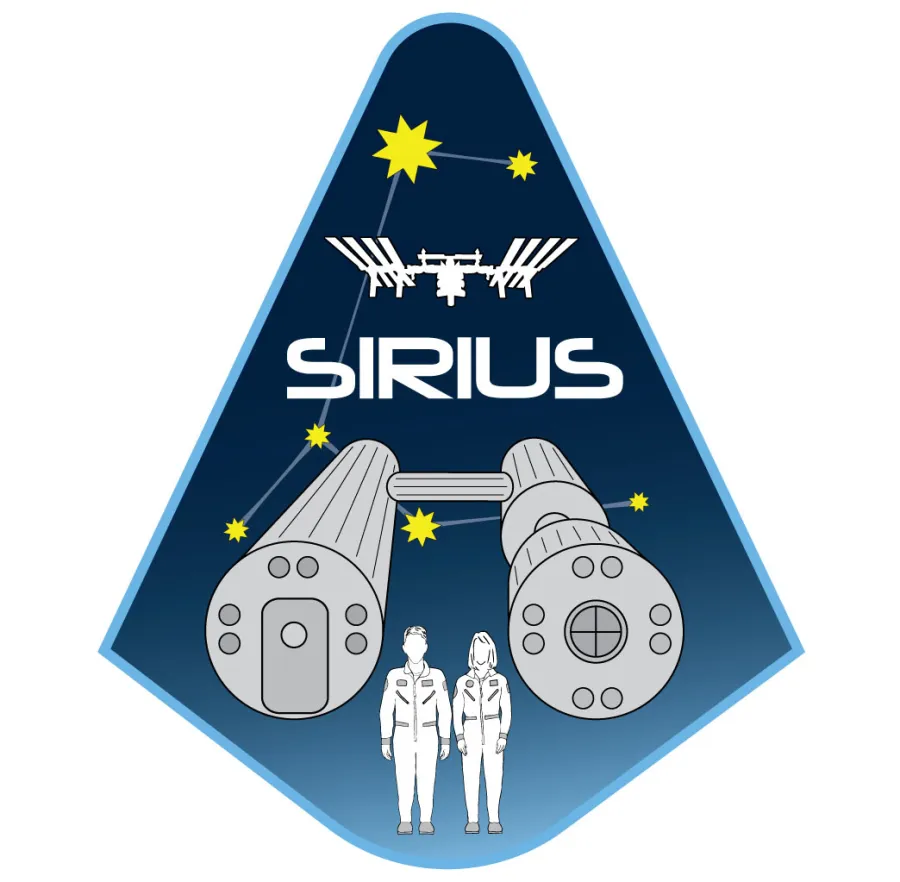
Some background: SIRIUS-21 was a ground-based lunar simulation run through an ESA-NASA-IBMP collaboration. There’s already a good deal of evidence and research to have come out of SIRIUS-21, and this new paper focuses specifically on crew cohesion and the psychosocial experience of the mission, in depth. It also addresses a gap flagged repeatedly in recent road mapping work (Pagnini et al., 2023; Le Roy et al., 2023), which was that post-mission reintegration is consistently identified as psychologically critical, and consistently under-researched.
In this upcoming research paper, six crew members took part but one withdrew early after an injury, leaving five in the final sample. Each crew member sat down for two interviews, the first within four days of returning home, and a second, longer follow-up six to twenty-one weeks later, once they’d had time to settle back into ordinary life. This gave the researchers a rare before-and-after psychosocial account, using Interpretative Phenomenological Analysis.
With the background laid out and the theoretical framework and method touched upon, the next bit of this preview is a small look into the three key themes that were developed over the course of the data analysis.
The first theme that was developed was “relationships in and outside the mission”. Two subgroups formed within the crew early on, but interestingly, the psychosocial data pointed to personality and temperament differences as the real driver, more than the early crew departure that prior network-analysis research had flagged as a likely cause. Relationships with Mission Control were also a recurring source of strain, including one particular incident that crew described as a violation of one of the only truly private spaces available to them.
The second theme was “individual characteristics”. Prior experience of isolation shaped expectations, but for some it built confidence and for others it collided uncomfortably with the mission’s actual demands. Coping strategies and personal motivations, particularly around career progression, helped sustain people through the mission, though not without complications once real-world events intervened. Taken together, prior experience predicted how people adapted more reliably than whether they struggled at all.
The third theme was “social structures”. Support from home mattered enormously during the mission, but several crew members found that friends and family struggled to relate to their experience once they returned, leaving fellow crew members as a durable source of post-mission support. An interesting finding here concerns autonomy: a rigid mission schedule was a source of frustration throughout, yet several crew members felt strangely destabilised once that structure disappeared at home.
Looking Forward
The paper’s recommendations extend well beyond lunar analogues, into other isolated, confined and extreme (ICE) settings. Building a strong crew-to-Mission-Control relationship before missions begin, extending psychological support well past the point of return, and training both crew and ground teams to handle external, real-world crises during long international missions are all key to ensuring missions in ICE environments go as smoothly as possible. Naturally, a single-mission, five-person sample can only take us so far. The authors point to future work tracking these relationships and coping processes longitudinally, and ideally capturing the relationships with Mission Control in more detail, as a next step for the field.